
0%
Loading ...
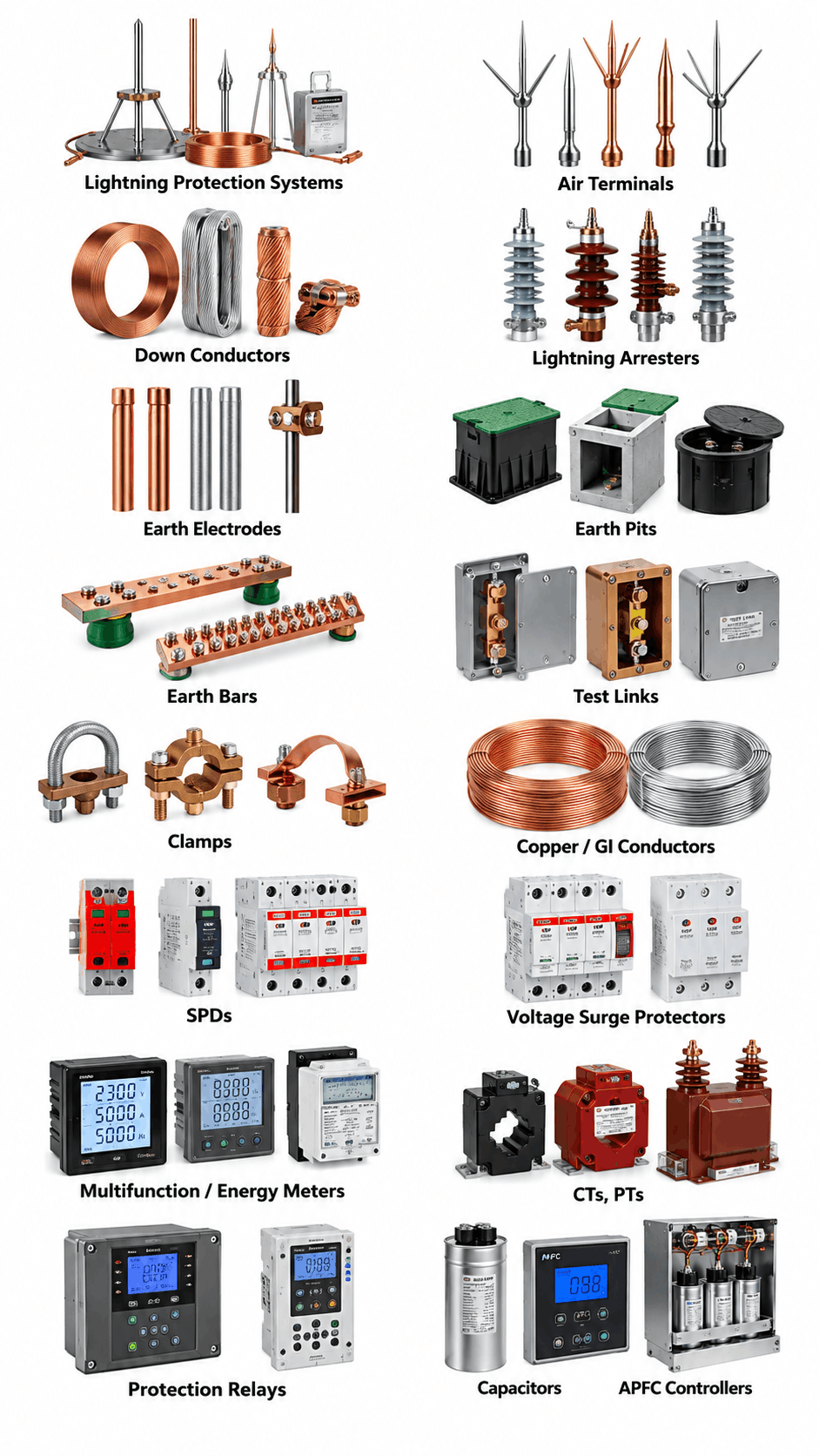
Lightning protection systems are used to safely capture and conduct lightning strikes away from buildings and critical structures. They help reduce the risk of fire, structural damage and electrical hazards across commercial, industrial and infrastructure installations.
Air terminals are installed at elevated points of buildings and structures to intercept lightning strikes. They provide a controlled connection to the lightning protection network, helping safely direct lightning current toward the earthing system.
Down conductors provide a controlled path for lightning current from air terminals to the earthing system. They are installed along protected structures to safely transfer electrical energy during lightning events and reduce potential damage.
Lightning arresters are used to protect electrical equipment and systems from transient overvoltage caused by lightning and switching events. They divert excessive surge energy safely toward earth, helping protect transformers, panels and connected electrical equipment.
Earth electrodes provide a conductive connection between an electrical earthing system and the surrounding soil. They help safely dissipate fault and lightning currents into the ground while supporting effective electrical protection and system grounding.
Earth pits provide an accessible location for installing and maintaining earthing electrodes and connections. They support effective dissipation of electrical fault and lightning currents into the ground while allowing inspection and maintenance of the earthing system.
Earth bars provide a common grounding point for connecting multiple protective earth conductors within electrical installations. They help organize earthing connections and provide a centralized path for safely managing fault and leakage currents.
Test links provide a disconnectable connection within earthing and lightning protection systems. They allow technicians to isolate sections of the grounding network for testing, measurement and maintenance while maintaining organized and accessible electrical connections.
Earthing and lightning protection clamps are used to securely connect conductors to electrodes, structural components and other grounding accessories. They provide mechanical and electrical connections while supporting continuous current paths within earthing and lightning protection installations.
Copper and GI conductors are used to carry lightning and fault currents between protection components and the earthing system. They provide conductive paths for safely transferring electrical current toward earth in grounding and lightning protection installations.
Surge Protective Devices are used to protect electrical and electronic equipment from transient voltage surges caused by lightning or switching events. They divert excessive surge energy away from connected equipment, helping reduce electrical damage and downtime.
Voltage surge protectors are used to limit temporary overvoltage and transient electrical surges within power distribution systems. They help protect sensitive equipment, control systems and electrical components from voltage disturbances across commercial and industrial installations.
Multifunction and energy meters are used to monitor electrical parameters such as voltage, current, power, frequency and energy consumption. They support electrical system monitoring, energy management and performance analysis across commercial, industrial and infrastructure installations.
Current transformers are used to reduce high electrical currents to measurable levels for metering, monitoring and protection equipment. They provide isolated current measurement for electrical panels, switchgear, substations and power distribution systems.
Potential transformers are used to reduce high system voltages to suitable measurable levels for electrical metering, monitoring and protection. They support safe voltage measurement and relay operation within substations, switchgear and high-voltage electrical distribution systems.
Protection relays monitor electrical parameters and detect abnormal conditions such as overloads, short circuits, earth faults and other system disturbances. They initiate protective actions to isolate faulty sections and help safeguard electrical equipment and distribution networks.
Electrical capacitors are used for reactive power compensation and power factor improvement in electrical systems. They help reduce reactive power demand and support efficient operation of electrical distribution networks, industrial equipment and power-consuming facilities.
APFC controllers automatically monitor power factor and control capacitor stages according to changing electrical loads. They support automatic reactive power compensation and help maintain suitable power factor conditions in commercial buildings, industries and electrical distribution systems.