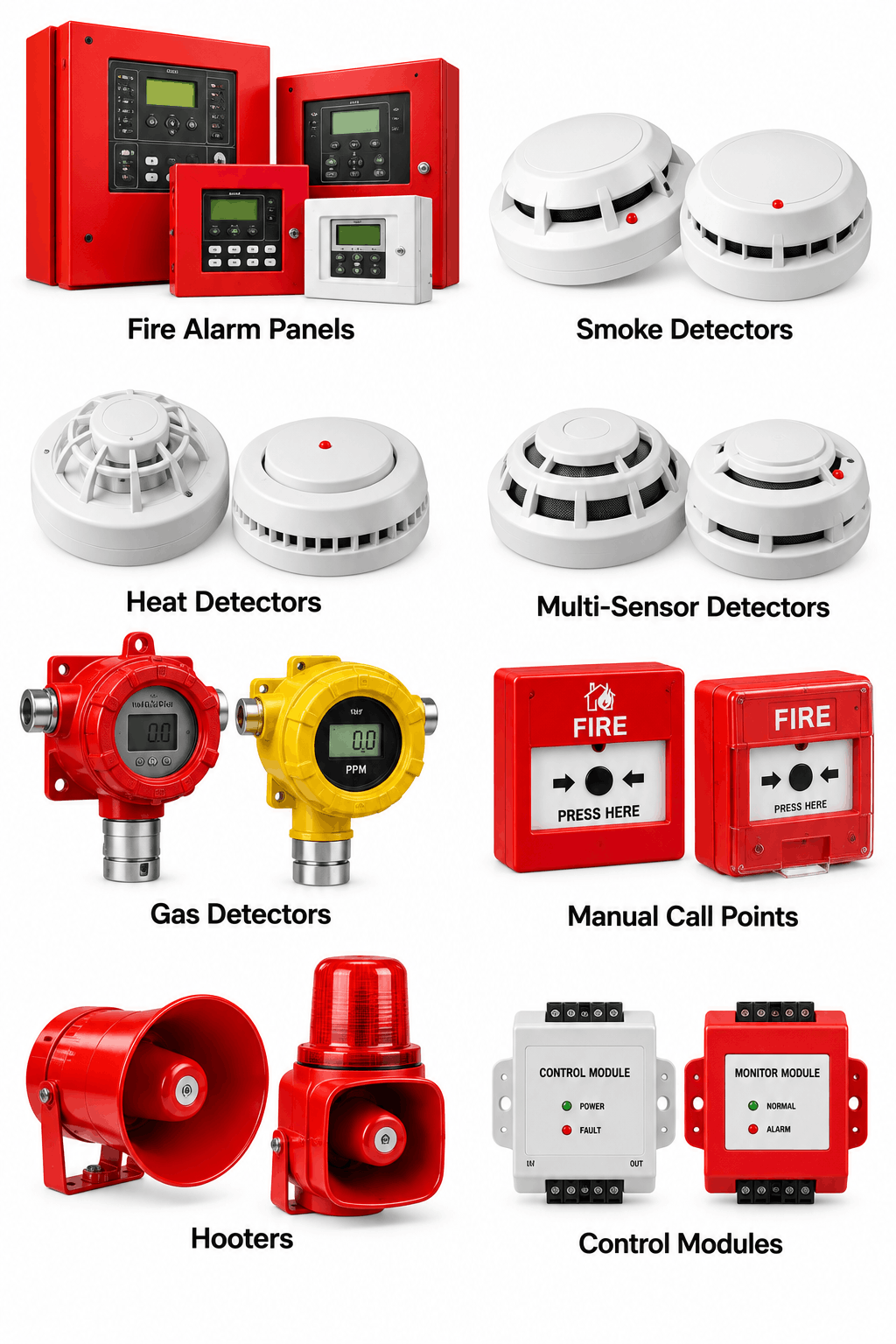
Fire alarm panels receive signals from connected detection and initiating devices, process fire events and activate alarms. They provide centralized monitoring and control for fire detection systems across buildings.
Smoke Detectors
Smoke detectors identify smoke particles generated during developing fires and send signals to the fire alarm panel. They support early fire detection in offices, buildings, commercial spaces and facilities.
Heat Detectors
Heat detectors respond when surrounding temperature reaches a predefined level or changes rapidly. They provide fire detection in areas where smoke detectors may be unsuitable, including kitchens and industrial spaces.
Multi-Sensor Detectors
Multi-sensor detectors combine multiple sensing technologies, such as smoke and heat detection, to identify potential fire conditions. They support improved detection across commercial, industrial and institutional building environments.
Gas Detectors
Gas detectors monitor the presence of specified combustible or hazardous gases and provide warning signals when concentrations reach configured levels. They support gas safety monitoring in industrial and commercial environments.
Manual Call Points
Manual call points allow occupants to manually activate the fire alarm during an emergency. They provide a simple method for immediately notifying the fire alarm system when fire is observed.
Hooters
Hooters provide audible warning signals when a fire alarm condition is activated. They help alert occupants and personnel throughout protected areas, supporting prompt evacuation and emergency response procedures.
Control Modules
Control modules connect and manage external devices within fire alarm systems, enabling monitoring or control of connected equipment. They support integration between fire detection systems and associated building services.